
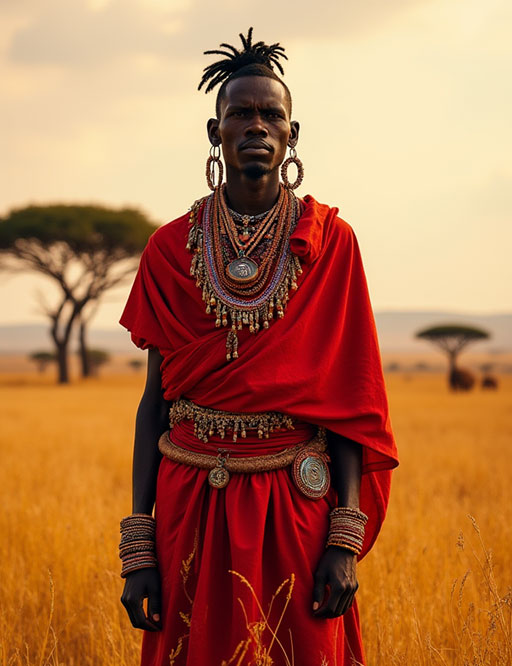
When you picture the vast, sun-drenched plains of East Africa, a specific image often comes to mind: a tall, graceful figure standing against the horizon, draped in a brilliant red cloth, spear in hand. This is the image of the Maasai. But the iconic Maasai culture is so much more than a stunning visual; it’s a complex and resilient way of life, deeply connected to the land, their community, and the cattle that are their sacred trust. Let’s look past the postcard and understand the heart of these remarkable people from Kenya and Tanzania.
The Maasai culture is a story of adaptation and unwavering identity, a testament to living in harmony with one of the wildest places on Earth.
The Sacred Bond: Life is Cattle
To understand the Maasai, you must first understand their relationship with cattle. It is everything. Their entire universe revolves around their herds. Cattle are not simply livestock; they are a divine gift from their god, Enkai, who is said to have lowered them from the sky on a rope.
Because of this sacred origin, the Maasai see themselves as the chosen custodians of all cattle. This belief shapes every aspect of their lives.
-
Wealth isn’t measured in currency, but in the number of cattle a person owns.
-
Sustenance comes directly from their herds, primarily in the form of milk and, on special occasions, blood and meat.
-
Social Status and major life events, like marriage, are all negotiated through the exchange of cattle.
This profound connection elevates a simple pastoral life into a spiritual calling.
A Community of Ages
Maasai society is built not on the individual, but on the community. Life is structured through a system of age-sets, where groups of boys born within the same period move through life’s stages together, forming an unbreakable bond of brotherhood.
The most famous of these stages is that of the Moran, or warrior. After a series of rites of passage, young men become the protectors of their community. For a period of years, they live separately, learning the skills of survival, bravery, and absolute loyalty. The Moran are responsible for defending their villages and, most importantly, their precious cattle from predators like lions. It’s a phase that forges them into disciplined and courageous leaders, ready for the responsibilities of elderhood.
The Language of Adornment
The visual identity of the Maasai is a vibrant language spoken through clothing and jewelry. The famous red shuka, or cloth, is a symbol of bravery and is believed to deter predators. But the most intricate stories are told through their beadwork, known as Enkang.
This is not just decoration; it’s a social map. The colors and patterns of a person’s beadwork can reveal their clan, marital status, age-set, and social standing. Each color has a deep meaning:
-
Red: Represents bravery, strength, and blood.
-
White: Symbolizes peace, purity, and health.
-
Blue: Signifies the sky and the gift of water. 💧
-
Green: Stands for the land and nourishment. 🌿
-
Orange/Yellow: Represents hospitality.
-
Black: Symbolizes the people and their struggles.
When you see their beadwork, you’re seeing a library of personal and cultural history.
Resilience in a Changing World
The world is changing, and the Maasai culture faces modern pressures, from land rights issues to climate change. Yet, they remain one of the most resilient peoples on the continent. They are adapting, finding a powerful balance between tradition and the future. Maasai leaders are now at the forefront of conservation efforts, working to protect the ecosystems they have stewarded for centuries. They are embracing education while ensuring their children learn the old ways, proving that a culture can evolve without losing its soul.


