
The Zulu are the largest ethnic group in South Africa, and their history is dominated by the meteoric rise of the Zulu Kingdom in the early 19th century. This history, combined with a rich spiritual and artistic tradition, has created a culture that is both incredibly strong and beautifully expressive.
The Forging of a Nation: The Legacy of Shaka
You cannot speak of the Zulu without speaking of Shaka Zulu. He was a military genius and a visionary nation-builder who transformed the Zulu from a small, insignificant clan into the most powerful and feared nation in Southern Africa.
Before Shaka, battles were often ritualistic affairs with long throwing spears. Shaka revolutionized warfare by introducing the iklwa, a short, broad-bladed stabbing spear, and perfecting the “buffalo horns” (izimpondo zankomo) military formation. This tactic allowed his highly disciplined regiments to encircle and annihilate their enemies. But Shaka didn’t just build an army; he forged a unified Zulu identity, creating a proud and cohesive nation that would later famously challenge the might of the British Empire. This history is the bedrock of their proud, martial identity.
The Language of Beads: Ubuhlalu
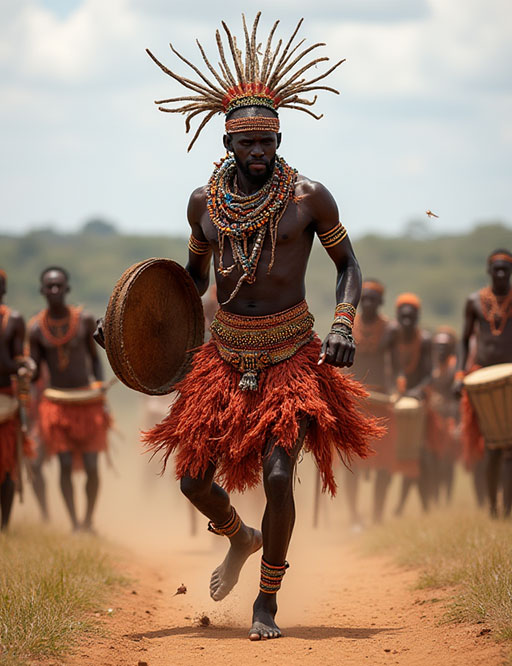
One of the most beautiful and intricate aspects of Zulu culture is its beadwork, known as ubuhlalu. This is not simple decoration; it is a complex symbolic language, a way of communicating messages without speaking a word.
The colors, shapes, and patterns all hold specific meanings, which can change based on their context.
-
Colors as Emotion: White can mean purity and love, red can signify intense love or anger, black can mean sorrow or marriage, and green represents contentment or new life.
-
The Love Letter: A young woman could weave a small beaded message, an incwadi, for a young man. He would wear it to show his acceptance, and everyone in the community who knew the “language” could read the status and nature of their relationship.
This vibrant art form communicates everything from personal feelings to social status and identity, making it a living, breathing part of their social fabric.
The Ever-Present Ancestors: Amadlozi
Traditional Zulu spirituality is centered on a belief in a creator god, uNkulunkulu, but the most vital and active part of their spiritual life is the veneration of ancestors, the amadlozi. The amadlozi are not distant spirits; they are an active and ever-present part of the family, acting as intermediaries between the living and the divine.
To maintain harmony and good fortune (inhlanhla), the amadlozi must be shown respect through rituals, offerings (like the ritual sacrifice of a cow or goat), and by living a life that honors the family name. Illness or misfortune is often seen as a sign that the ancestors are displeased. A traditional diviner, the sangoma, is a revered spiritual healer who can communicate with the amadlozi through divination to understand their messages and restore balance to the community.
The Zulu culture is a full-bodied experience, most powerfully expressed in its music and dance. Traditional Zulu dance is a spectacular display of strength and rhythm, with high kicks and powerful foot-stomping that echoes the movements of warriors. In contrast, the choral music style of isicathamiya, made world-famous by the group Ladysmith Black Mambazo, showcases their incredible gift for complex and beautiful vocal harmony. It is a culture of profound depth, where the strength of a warrior coexists with the intricate beauty of a beaded message and the soulful harmony of a choir.


