
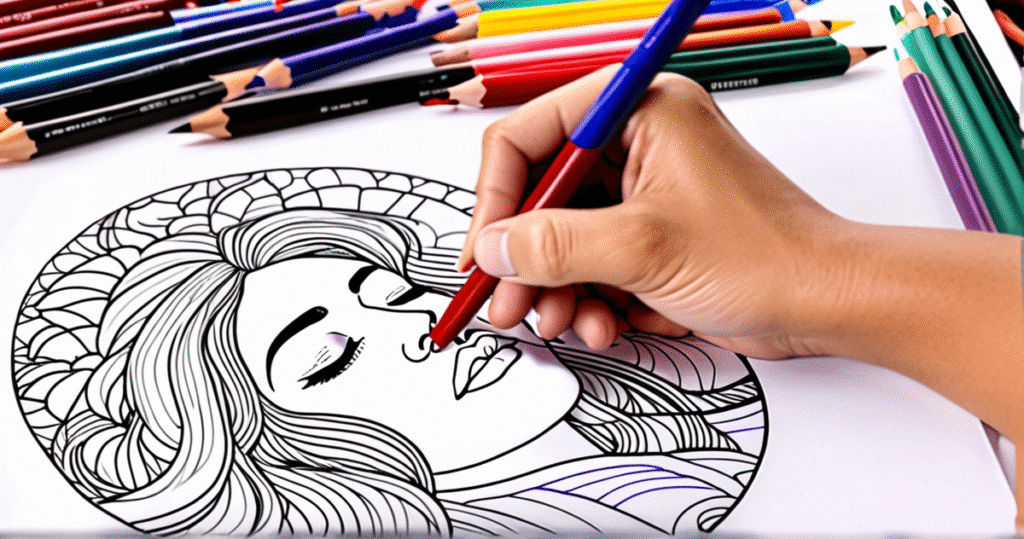
In a world filled with notifications, deadlines, and endless to-do lists, finding moments of calm can feel impossible. But what if a simple, childhood pastime—like coloring—could offer real mental health benefits?
Turns out, adult coloring isn’t just a trend—coloring helps with stress relief and mindfulness. Let’s explore how picking up a colored pencil can quiet your mind and restore your sense of peace.
🧠 The Science Behind Coloring and Stress Reduction
Research shows that coloring activates the brain’s relaxation response. A 2017 study published in Art Therapy: Journal of the American Art Therapy Association found that just 20 minutes of coloring significantly reduced anxiety levels in adults—more so than free-drawing.
Why? Coloring engages the prefrontal cortex, the part of the brain responsible for focus and decision-making, while simultaneously quieting the amygdala—the brain’s fear center. This creates a meditative state similar to mindfulness meditation.
“Coloring provides just enough structure to focus the mind without overwhelming it,” says Dr. Stan Rodski, a clinical psychologist and creator of bestselling adult coloring books.
🕊️ Coloring as a Form of Mindfulness
Mindfulness is about being fully present in the moment—without judgment. Coloring naturally encourages this:
- Repetitive patterns (like mandalas or geometric designs) require gentle focus
- Hand-eye coordination draws attention away from racing thoughts
- Creative choice (e.g., “Should I use blue or green here?”) keeps you grounded in the now
Unlike scrolling through social media—which fragments attention—coloring is a single-task activity that fosters mental stillness.
💆♀️ Mental Health Benefits Beyond Stress Relief
Regular coloring can support your overall emotional well-being:
- Reduces symptoms of anxiety and depression
- Improves sleep by calming the nervous system before bed
- Boosts self-esteem through creative accomplishment
- Offers a screen-free break from digital overload
Many therapists now incorporate coloring into art therapy sessions, especially for clients struggling with PTSD, OCD, or chronic stress.
🖍️ Tips for Mindful Coloring
Want to maximize the benefits? Try these tips:
- Choose intricate designs (mandalas, nature scenes, or abstract patterns work best)
- Set a timer for 15–30 minutes—no distractions
- Use quality tools: gel pens, colored pencils, or markers you enjoy
- Focus on the sensation: notice the sound of the pencil, the colors blending
- Let go of perfection—there’s no “right” way to color
Pro Tip: Pair coloring with soft music or silence—avoid multitasking!
❓ Is Coloring Right for Everyone?
While not a replacement for professional mental health care, coloring is a low-cost, accessible wellness practice suitable for most people. Even skeptics often report feeling calmer after just one session.
If you’ve tried meditation and found it difficult, coloring may be a gentler entry point into mindfulness.
🌈 Final Thoughts: A Simple Act with Powerful Effects
In just a few minutes a day, coloring can help you press pause on stress, reconnect with the present, and nurture your inner calm. It’s creative, therapeutic, and—most importantly—enjoyable.
So grab a coloring book, pick your favorite hues, and give your mind the break it deserves.
Your turn: Have you experienced stress relief through coloring? Share your favorite designs in the comments!
🔗 Helpful Resources
- American Art Therapy Association
- NIH Study on Art Therapy and Anxiety
- Mayo Clinic: Stress Management Tips
If you enjoyed this post, check out our guide to 5 Mindfulness Exercises You Can Do in 5 Minutes .


