
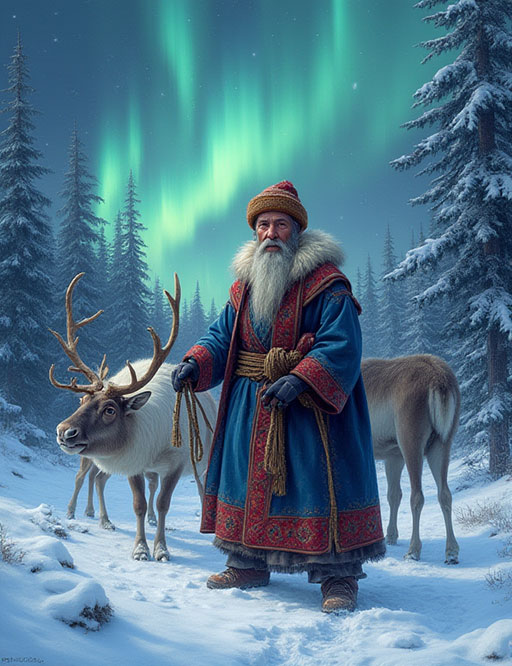
The Sámi people are Europe’s northernmost indigenous group, inhabiting a vast region they call Sápmi. This traditional homeland stretches across the northern parts of Norway, Sweden, Finland, and Russia’s Kola Peninsula. For thousands of years, they have lived in intimate harmony with this demanding Arctic environment, developing a worldview built on sustainability, community, and a spiritual connection to the land and its creatures.
The Heartbeat of the Land: Reindeer Herding
For many Sámi, especially those in the central and northern regions, the reindeer is not just an animal; it is the absolute center of their universe. Reindeer herding is more than an occupation; it is a way of life, a cultural identifier, and a profound spiritual connection to the land.
The reindeer provides almost everything:
-
Food: Meat, milk, and blood.
-
Clothing: Warm, durable skins for traditional garments.
-
Tools: Antlers and bones for crafting utensils and implements.
-
Transportation: For pulling sleds across the snow.
The semi-nomadic lifestyle of the reindeer herders, following the ancient migratory paths of their herds, embodies a deep, cyclical understanding of nature. This respectful stewardship of the land has allowed them to thrive for millennia in an environment where others would simply not survive.
The Power of the Voice: Joik
One of the most unique and ancient art forms of the Sámi culture is the joik (juoiggus). This is not a song about something; it is a musical expression that is something. A joik can be dedicated to a person, an animal, a place, or even a feeling. It captures the essence, the spirit, the very being of its subject.
Each joik is unique, a personal vocal fingerprint that expresses deep emotion and connection. It’s often deeply personal, sung in a powerful, evocative style that can range from meditative to intensely rhythmic. The joik is a direct line to their spiritual heritage, a living, breathing connection to their ancestors and the land.
Clothes That Tell a Story: Gákti and Duodji
The traditional Sámi dress, the gákti, is a vibrant and functional masterpiece. Made from wool, leather, or reindeer skin, the gákti is not just clothing; it’s an identity marker. The colors, patterns, and ornaments—like intricate pewter thread embroidery—can indicate a person’s marital status, where they are from (their region or family), and even their age.
Alongside the gákti, duodji refers to traditional Sámi handicrafts, such as beautifully carved wooden cups (guksi), intricate knives, and items made from reindeer antler and leather. These are not mass-produced souvenirs; they are functional objects crafted with immense skill, imbued with the spirit of the maker, and deeply connected to their practical way of life.
A Resilient Fight for Rights and Revival
For centuries, the Sámi people have faced systematic oppression, forced assimilation, and the confiscation of their lands by the dominant nation-states. Their languages were banned, their children taken to boarding schools, and their way of life threatened.
However, the Sámi culture has proven incredibly resilient. Today, there is a powerful resurgence across Sápmi. Sámi parliaments have been established in Norway, Sweden, and Finland, giving them a voice in governance. The Sámi languages are being revitalized, the joik is celebrated, and their unique artistic traditions are flourishing. Their fight for self-determination and the protection of their ancestral lands continues, a powerful testament to their enduring spirit as Europe’s indigenous guardians of the Arctic.


