
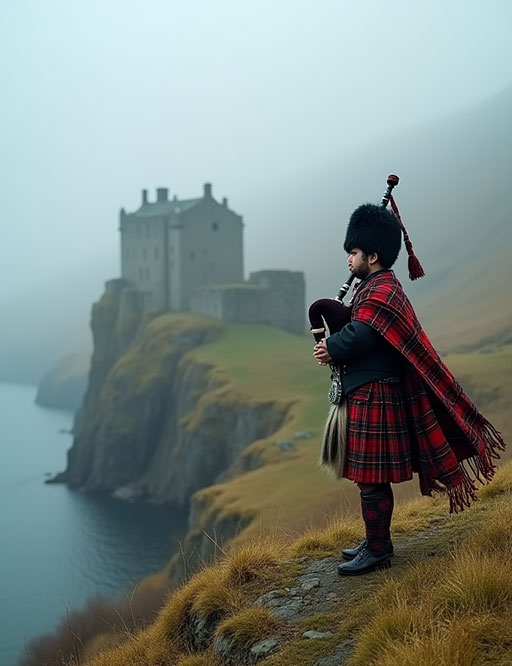
When you think of Scotland, the image that likely comes to mind is that of the Highlands. It’s a landscape that is more than just a backdrop; it is the main character in the story of its people. This is a culture defined by the clan, colored by the tartan, and voiced by the haunting cry of the Great Highland Bagpipe.
The Unbreakable Bond: The Clan System
For centuries, the heart of Highland society was the clan. A clan was so much more than a family; it was a tribe, a nation in miniature, bound together by ties of blood, loyalty, and a shared name. At the head was the clan chief, who was not a distant ruler but a father figure, responsible for the protection and welfare of his people.
Life was harsh, and loyalty to your clan was everything. It was your identity, your protection, and your social safety net. To be clanless was to be an outcast, vulnerable and alone. This system fostered an incredible sense of community and a fierce, warrior spirit, as clans often feuded with one another over land and honor. While the old clan system was dismantled centuries ago, the sense of kinship and a deep connection to one’s surname and ancestral lands remains a powerful part of the Highland identity today.
The Fabric of a Nation: The Kilt and Tartan
No garment is more famously associated with a culture than the kilt is with the Scottish Highlands. The original Highland kilt, the féileadh-mòr or great kilt, was a large, untailored wool blanket that was expertly pleated and belted at the waist, with the remainder thrown over the shoulder. It was a versatile garment, providing warmth, freedom of movement, and even serving as a sleeping bag at night.
The iconic patterns woven into the wool are known as tartan. Today, we associate specific tartans with specific clans, but historically, the patterns were more likely linked to a particular region and the local dyes available. After the failed Jacobite Rising of 1745, the British government brutally suppressed Highland culture, even banning the wearing of tartan and kilts in the infamous Dress Act. This act of oppression, however, only made the kilt a more powerful symbol of defiance and national identity when the ban was eventually lifted. Today, it is worn with immense pride.
The Voice of the Highlands: The Great Highland Bagpipe 🎶
You hear it before you see it—a sound that is at once haunting, powerful, and utterly unique. The Great Highland Bagpipe is not just an instrument; it is the soul of the Highlands given voice. It is a sound that can stir the heart to courage or break it with sorrow.
The pipes were the instrument of both war and peace. The piobaireachd (pibroch), the classical music of the pipes, consists of complex and deeply emotional themes and variations. In battle, the skirl of the pipes was used to rally the clan and intimidate the enemy. At gatherings and funerals, it provided the soundtrack to Highland life. Its powerful sound seems to carry on the wind, a perfect echo of the wild and dramatic landscape from which it was born.
A Spirit Forged in Stone
The Scottish Highland culture is one of incredible resilience. The people have endured immense hardship, most notably the Highland Clearances of the 18th and 19th centuries, when landowners forcibly evicted thousands of families from their ancestral lands to make way for more profitable sheep farming. This brutal act scattered the Highland people across the globe, creating a vast Scottish diaspora.
Yet, the spirit was not broken. It lives on in the myths and legends of the land, in the belief in loch monsters and mischievous fairies. It lives on in the fierce pride people have in their heritage. And it lives on in the quiet, enduring strength of the mountains themselves.


