
Sicily has always been a prize. Its strategic location and fertile volcanic soil have made it a target for conquest since the dawn of history. But every conqueror left something behind, creating layer upon layer of cultural DNA that makes the island so utterly unique. This isn’t just a part of Italy; it’s a continent in miniature.
The Island of a Thousand Cultures
The story of Sicily is a story of fusion.
-
The Greeks gave Sicily its grand theaters and magnificent temples, like those in Agrigento’s Valley of the Temples.
-
The Romans turned it into the breadbasket of their empire.
-
The Arabs transformed the island, introducing citrus fruits 🍋, almonds, and pistachios, along with advanced irrigation. Their influence is still felt in the bustling, souk-like markets of Palermo.
-
The Normans, arriving after the Arabs, didn’t erase what they found. Instead, they blended it, creating a breathtaking Arab-Norman architectural style. Cathedrals like Monreale are wonders of the world, covered in golden Byzantine mosaics, featuring pointed Arab arches and solid Norman stonework.
-
The Spanish followed, leaving behind a legacy of stunning Baroque architecture and a certain flair for drama.
This constant churn of history means the Sicilian culture is a spectacular mosaic, unlike anywhere else on Earth.
The Sacred Family and the Shadow of the Volcano
At the absolute center of the Sicilian universe is la famiglia. The family is the ultimate source of loyalty, identity, and protection. This intense bond often creates a deep-rooted suspicion of outsiders and official state institutions, a feeling known as campanilismo—loyalty only to your own “bell tower” or village.
This sense of a powerful, sometimes dangerous, world is amplified by the island’s most dominant feature: Mount Etna. The largest active volcano in Europe is not just a mountain; it’s a living, breathing deity. It is both a creator, its volcanic ash producing incredibly fertile soil, and a destroyer, its eruptions a constant reminder of nature’s awesome power. Living under its shadow has given Sicilians a unique blend of fatalism, resilience, and a deep respect for the forces beyond their control.
A Feast for the Senses
The soul of Sicily is best understood through its vibrant daily life and art.
-
The Food: Sicilian cuisine is a map of its history. You can taste the Arab influence in dishes like couscous and sweets made with almonds and pistachios. The Greek love for fresh, simple ingredients shines in their use of olive oil, tomatoes, and eggplant (the star of pasta alla Norma). And of course, there are iconic street foods like arancini (fried rice balls) and the heavenly ricotta-filled pastry, the cannolo.
-
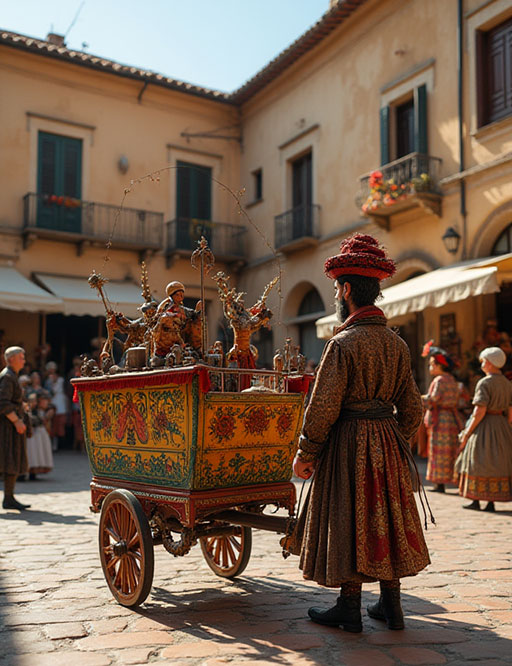
The Puppet Theatre: The Opera dei Pupi is a traditional form of puppet theater, recognized by UNESCO, that tells the epic tales of medieval knights and chivalrous heroes. It’s a passionate, dramatic art form that captures the Sicilian love for grand stories.
-
The Ceramics: From Caltagirone, the vibrant, hand-painted ceramics are famous, especially the Moorish Heads (teste di Moro) that tell a dramatic legend of love and jealousy.
The Sicilian culture is one of passion, pride, and complexity. Its history has been turbulent, creating a people who are warm and incredibly hospitable, yet fiercely proud and protective. It is a land of light and shadow, a place that gets under your skin and stays with you forever.


