
Style Overview:
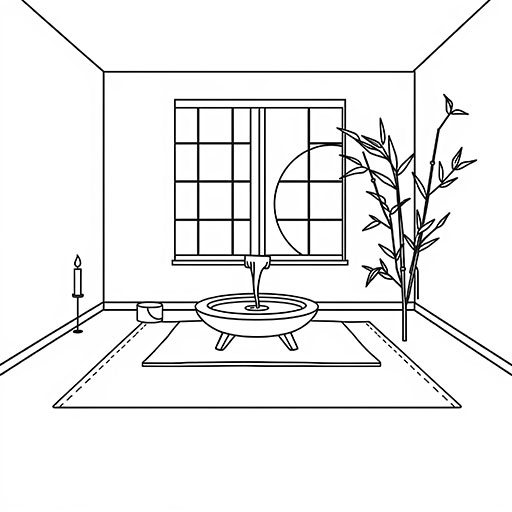
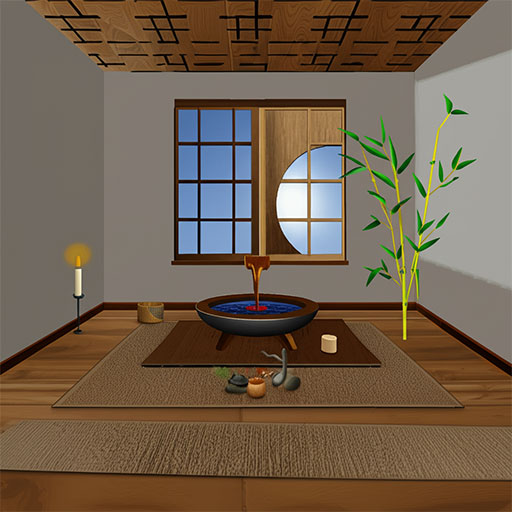
A Zen-inspired meditation space embodies tranquility, minimalism, and natural harmony. Rooted in Japanese Zen philosophy, this style emphasizes simplicity, uncluttered space, and the mindful arrangement of objects to foster calm and reflection. Natural materials like bamboo, wood, and stone, combined with soft, indirect lighting and muted colors, create a serene atmosphere ideal for meditation, relaxation, and mindfulness practices.
Historical Context
Zen aesthetics grew out of the Japanese Zen Buddhist tradition dating back to the 12th century, focusing on meditation (zazen) and the appreciation of subtle beauty in everyday objects. The architectural and interior design principles emphasize ‘wabi-sabi’ — finding beauty in imperfection and impermanence — and ‘ma,’ the mindful use of empty space. Post-World War II, Zen design influenced Western minimalist movements, bringing its philosophy of calm, balance, and natural materials into modern interior spaces.
Key Elements
-
Natural Materials: Bamboo mats, tatami flooring, wooden furniture, stone accents.
-
Neutral Color Palette: Soft earth tones—beige, taupe, gray, and off-white.
-
Minimalist Furniture: Low, simple floor cushions and small wooden tables.
-
Soft Lighting: Paper lanterns, candles, or dimmable lamps providing warm, indirect light.
-
Natural Elements: Indoor plants, bonsai trees, or small water features.
-
Clutter-Free Space: Emphasis on open areas and thoughtful placement of objects.
Influential Designers
-
Tadao Ando — Renowned for his minimalist concrete architecture integrating natural light and simplicity.
-
Kengo Kuma — Known for blending traditional Japanese design with modern aesthetics and natural materials. https://kkaa.co.jp/
-
Muji Design Team — Famous for their minimalist, functional home products and interiors inspired by Zen principles.
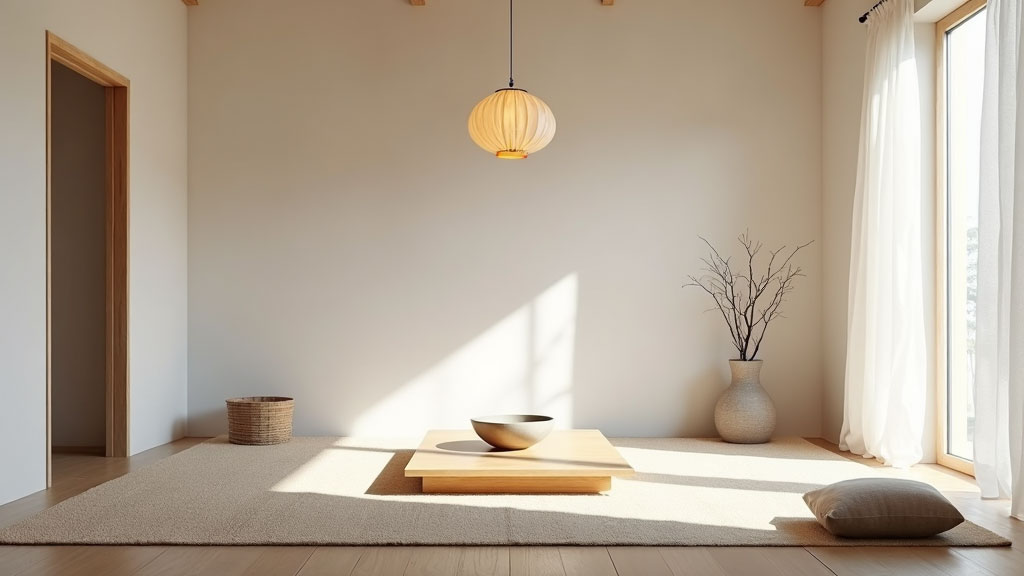
Calm and Clutter-Free
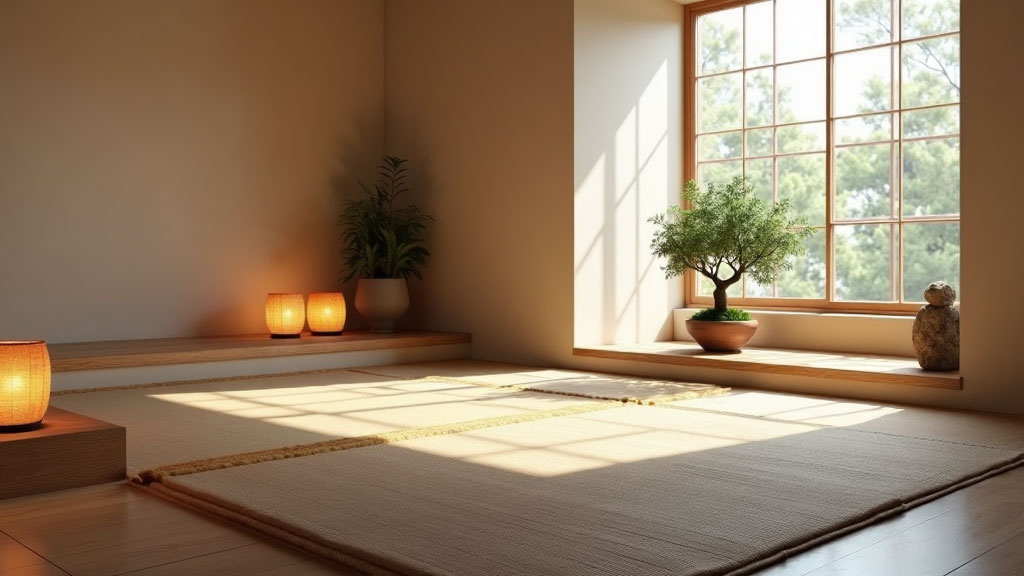
Serene Zen Corner
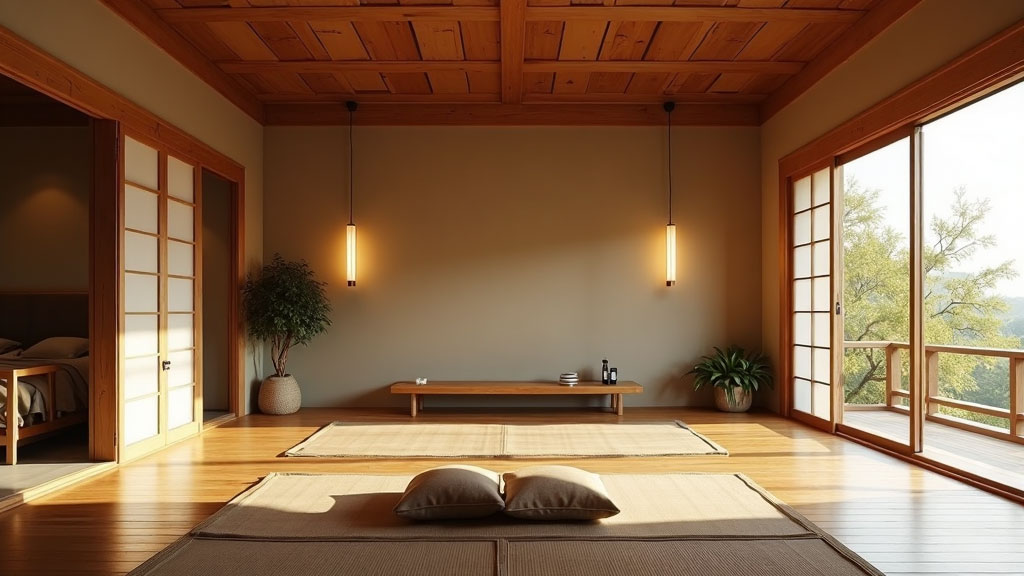
Minimalist Meditation Room
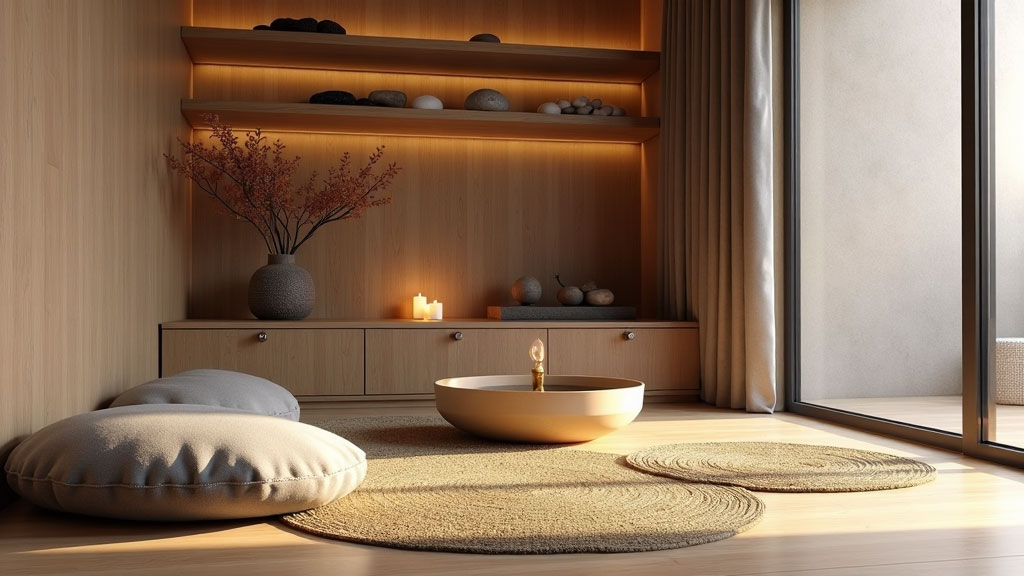
Natural Harmony Space


