
Style Overview:
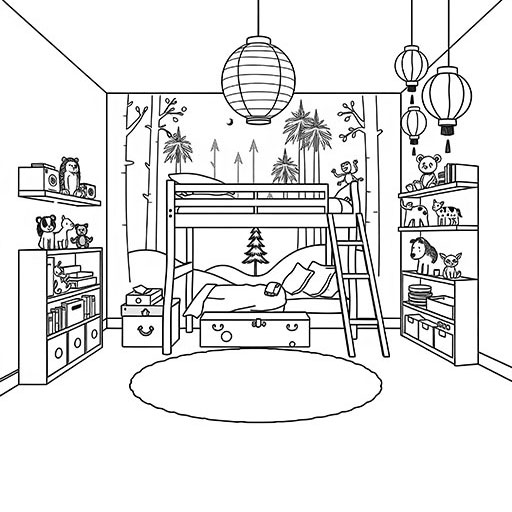
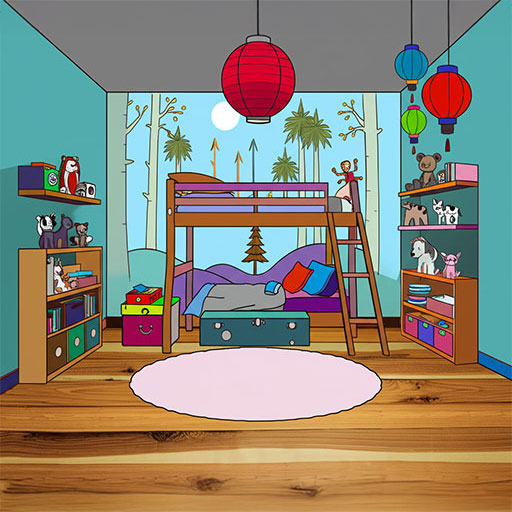
A vibrant kids’ playroom is designed to spark imagination, movement, and hands-on learning. Bright colors, low shelving, and kid-scaled furniture create an engaging environment where play and discovery take center stage. The room balances stimulation with organization so children can explore safely while caregivers keep things tidy and accessible.
Historical Context
Dedicated play spaces emerged in the 20th century as childhood education and leisure were reimagined—early playrooms reflected Victorian nurseries, later evolving with progressive education movements. Montessori and Froebel philosophies (early 1900s) influenced modern playroom design by emphasizing child-scaled furniture, open access to materials, and learning through play. The late 20th and early 21st centuries added safety standards, storage innovations, and a focus on multi-sensory, developmentally appropriate design.
Key Elements
-
Low, accessible shelving for toys and books (easy for small hands).
-
Colorful, durable seating: beanbags, floor cushions, small chairs and benches.
-
Activity zones: art table, reading nook, building area, and imaginative play corner.
-
Soft flooring & rugs for cushioning and defined play areas.
-
Storage solutions: labeled bins, cubbies, and hooks to teach tidy habits.
-
Playful accents: chalkboard/whiteboard wall, wall decals, hanging mobiles, and tactile toys.
Influential Designers / Resources (copy & paste URLs):
-
Cas Holman — toy & play-system designer focused on open-ended play.
-
Jean Orpwood / Spacelab (play environments) — examples of child-centric spatial design.
-
Lella & Massimo Vignelli (design simplicity & color use) — design principles applicable to playful, well-designed spaces.
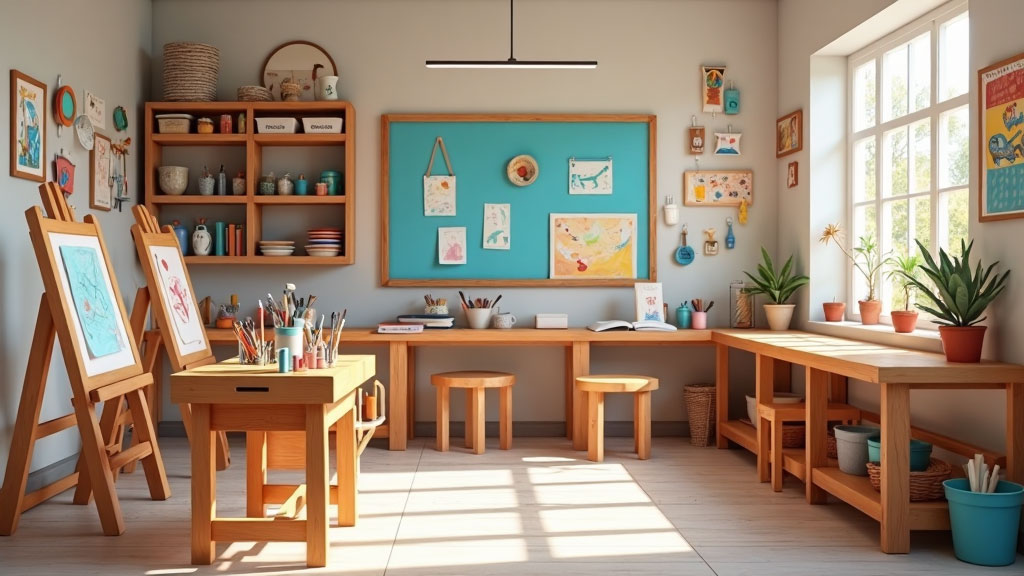
Creative Arts & Makers Corner
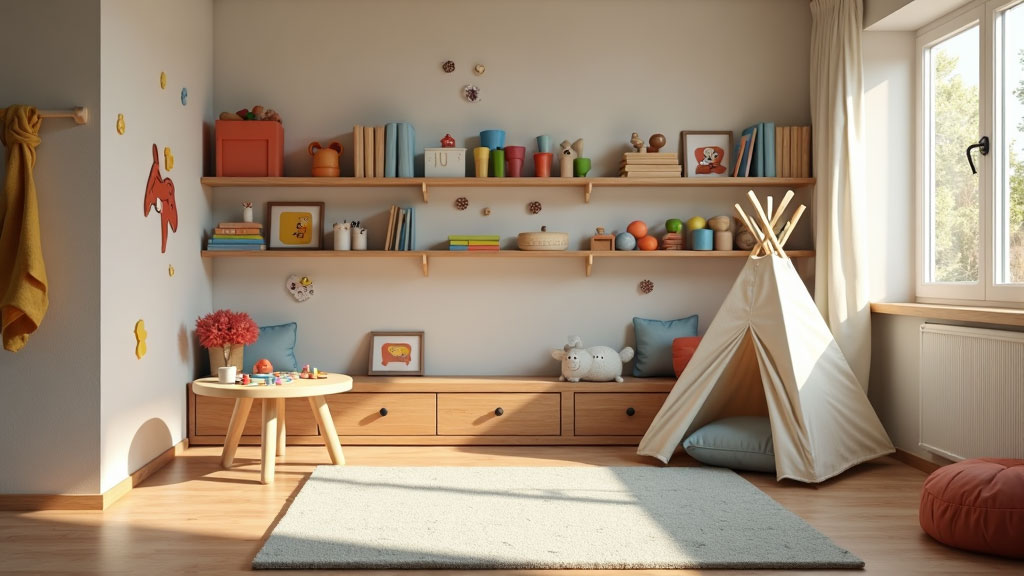
playroom-1
Playful Learning Loft
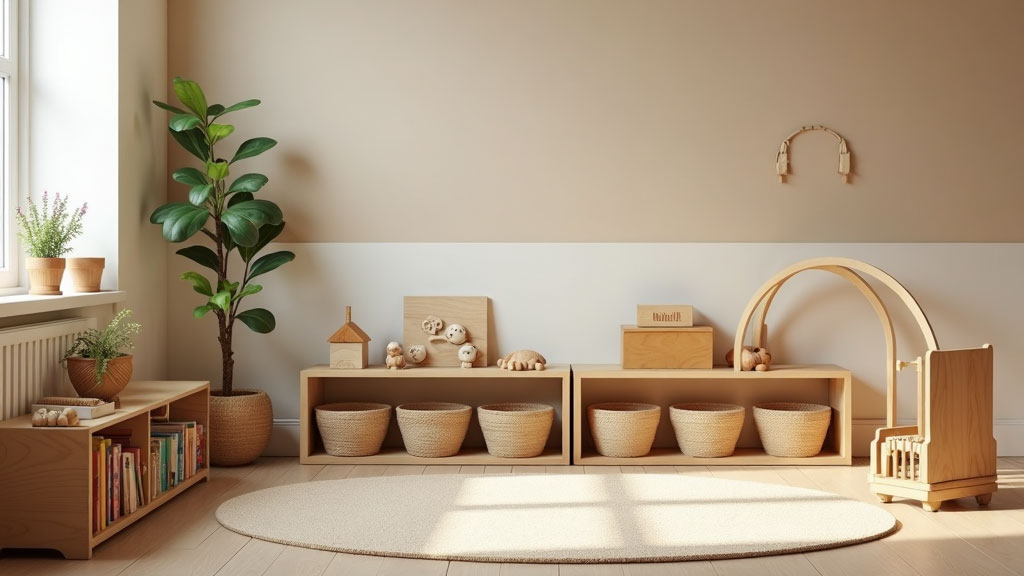
Montessori-Friendly Play Space
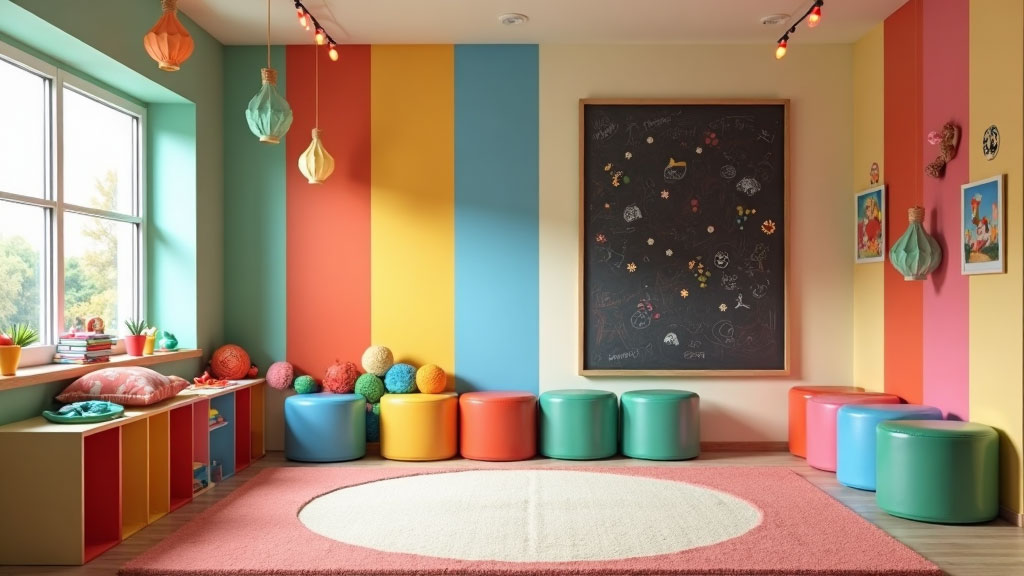
playroom-3
Rainbow Activity Room


