
Style Overview:
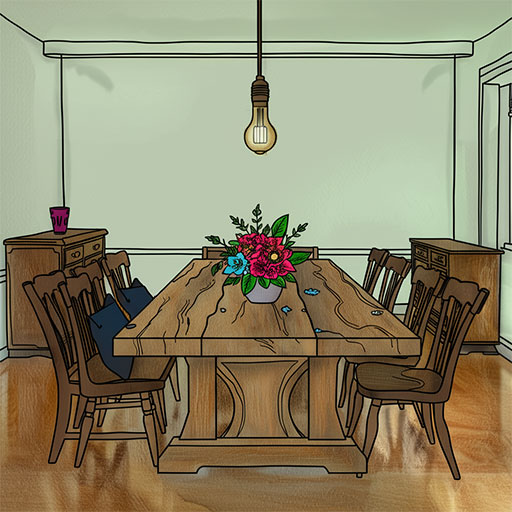
The rustic dining room embraces warmth, authenticity, and natural beauty. At its heart is a solid wooden table—often distressed, reclaimed, or farmhouse-style—surrounded by a mix of seating like bench-style chairs or mismatched wood chairs. Hanging light fixtures, typically wrought iron or vintage-style pendants, illuminate the space with a cozy glow. The vibe is inviting, down-to-earth, and timeless.

Historical Context:
Rustic design has its roots in traditional country homes and rural cottages, where practicality and available materials defined the aesthetic. Heavy wood furniture, natural textiles, and handmade touches characterized these interiors. Over time, rustic style evolved into a coveted design trend that celebrates imperfections, organic textures, and a return to simplicity.
The modern rustic look often fuses farmhouse charm with industrial or even minimalist elements, creating a balanced mix of comfort and sophistication.
Key Elements:
-
Reclaimed or Natural Wood Table – The focal point, offering both character and durability.
-
Textural Materials – Burlap, linen, jute rugs, or weathered finishes for depth and coziness.
-
Statement Lighting – Chandeliers, lanterns, or pendant lights with exposed bulbs or metal details.
-
Warm Earth Tones – Browns, creams, muted greens, and terracotta shades.
-
Vintage Decor – Mason jars, pottery, baskets, or hand-thrown ceramics.
-
Layered Softness – Cushions or throws on chairs, curtains made of natural fibers.
Influential Designers:
-
Joanna Gaines – Queen of modern farmhouse style; she popularized rustic dining through her Fixer Upper series.
-
Thomas O’Brien – Blends rustic warmth with sophisticated vintage-inspired lighting and furnishings.
-
Amber Lewis – Known for California-inspired rustic interiors with relaxed, natural elegance.

Classic Rustic Dining Room

Modern Rustic Style

Cozy Country Dining

Elevated Farmhouse Vibe


