
Style Overview:
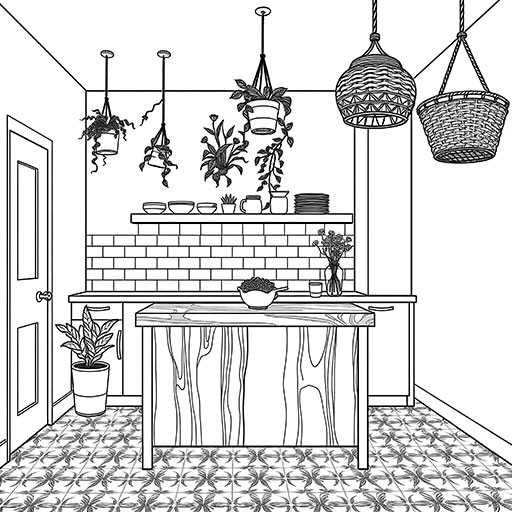
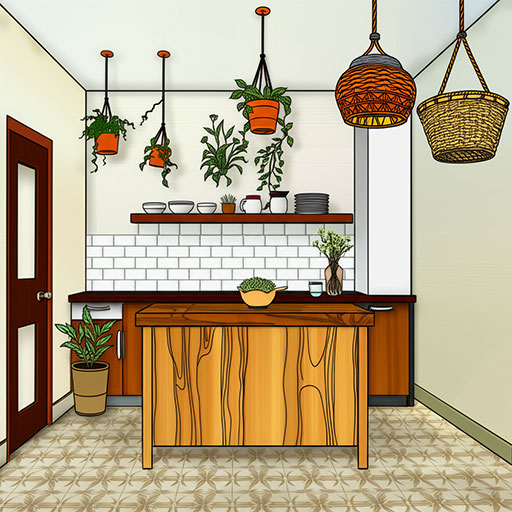
A boho-inspired kitchen is where creativity and comfort meet. It combines vivid colors, global influences, eclectic details, and a laid-back spirit. Colorful patterned tiles are often used for backsplashes or floors, while hanging plants bring life and movement into the space. This aesthetic embraces imperfection and individuality, creating a kitchen that feels warm, vibrant, and lived-in.
Historical Context:
Bohemian (or “boho”) style originates from 19th-century Paris, where artists, writers, and free-thinkers created spaces that reflected their unconventional lifestyles. The boho interiors we know today draw heavily from Moroccan, Indian, and Mediterranean design traditions—known for their vibrant textiles, hand-painted tiles, and rich textures. In the 1960s and ’70s, the boho style resurged in Western interior design, embracing a “hippie” ethos of freedom, self-expression, and global fusion.
Modern boho kitchens blend handcrafted materials, vintage finds, and natural elements to form a cozy, unpolished beauty that’s uniquely personal and endlessly evolving.
Key Elements:
-
Colorful Tiles – Moroccan or Spanish-style backsplash tiles, often in geometric or floral patterns.
-
Open Shelving – Wood shelves showcasing eclectic dishes, pottery, or spice jars.
-
Hanging Plants – Trailing greenery like pothos or string of pearls in macramé holders.
-
Textured Fabrics – Woven rugs, tea towels, or curtains with tribal or ethnic prints.
-
Vintage Accessories – Brass or copper cookware, reclaimed wood accents, and global trinkets.
-
Warm Earthy Colors – Burnt orange, mustard, teal, olive, and ochre tones.
Influential Designers:
-
Justina Blakeney – Creator of The Jungalow, a design movement that fully embraces bohemian living with bold prints, plants, and color.
-
Kelly Wearstler – While more modern-eclectic than purely boho, she often mixes global and vintage influences in daring, artistic ways.
-
Amber Lewis – Known for laid-back California interiors that often include bohemian textures and layering.
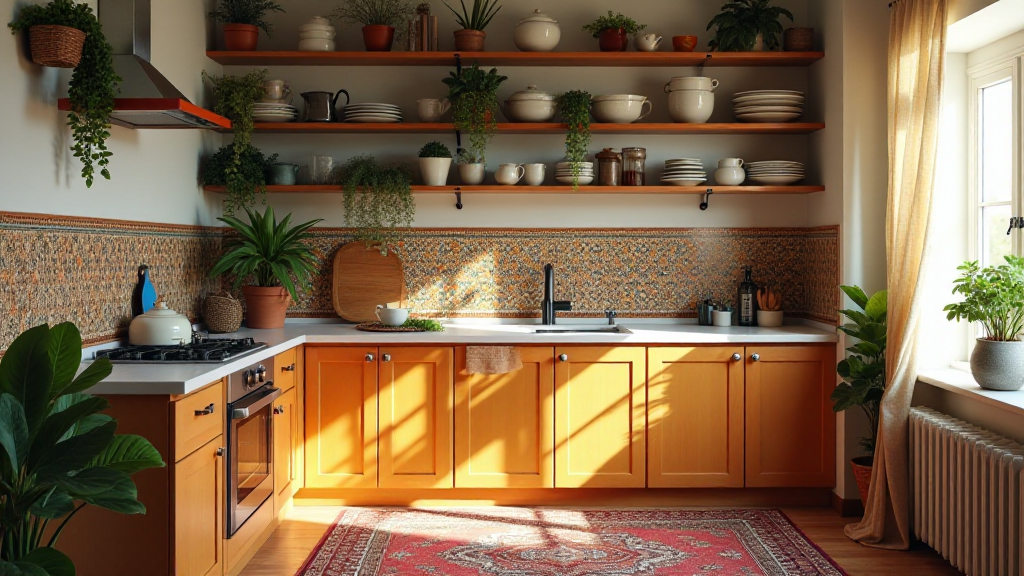
Moroccan Boho Kitchen
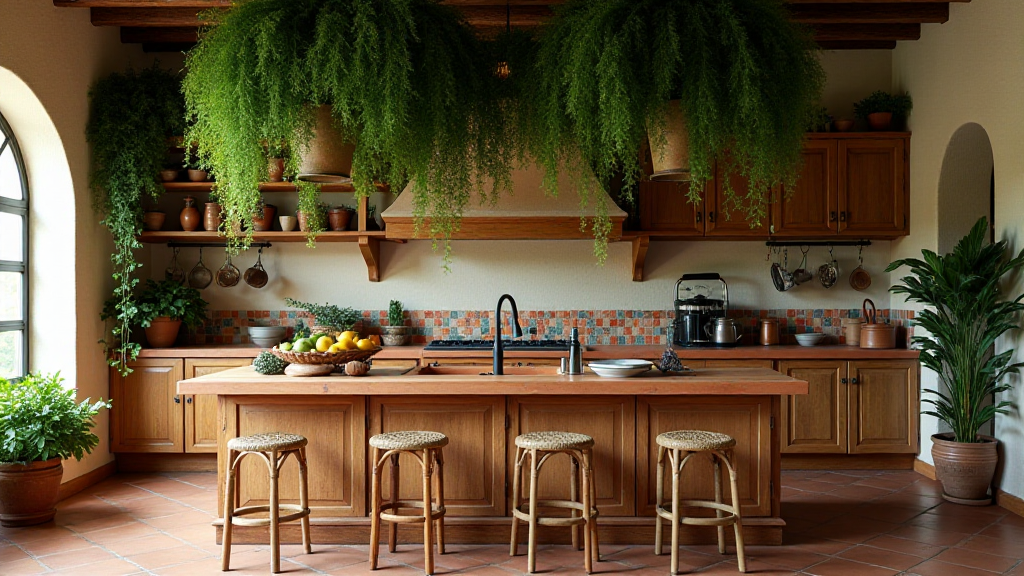
Jungle-Inspired Boho Kitchen
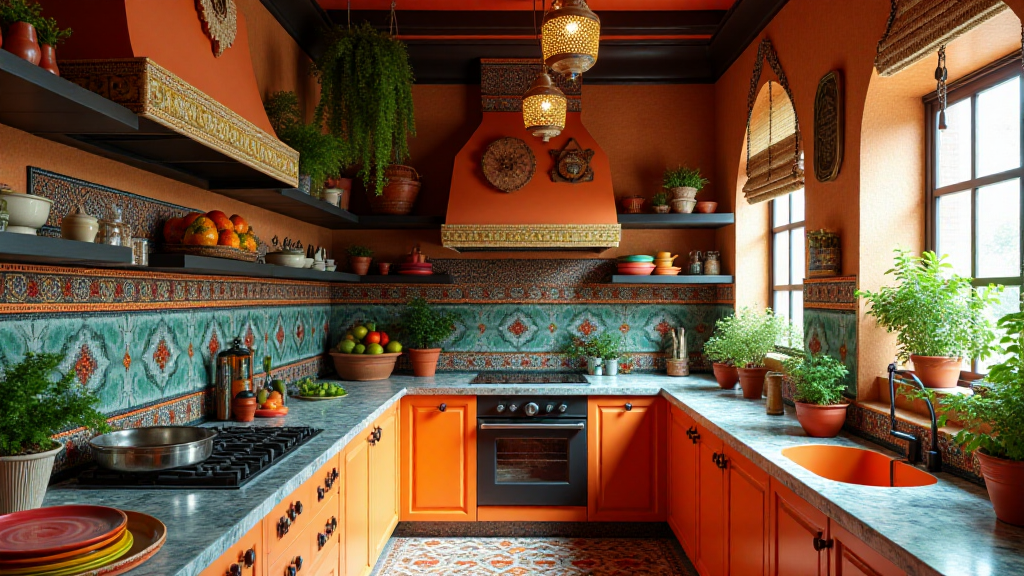
Global Boho Fusion Kitchen
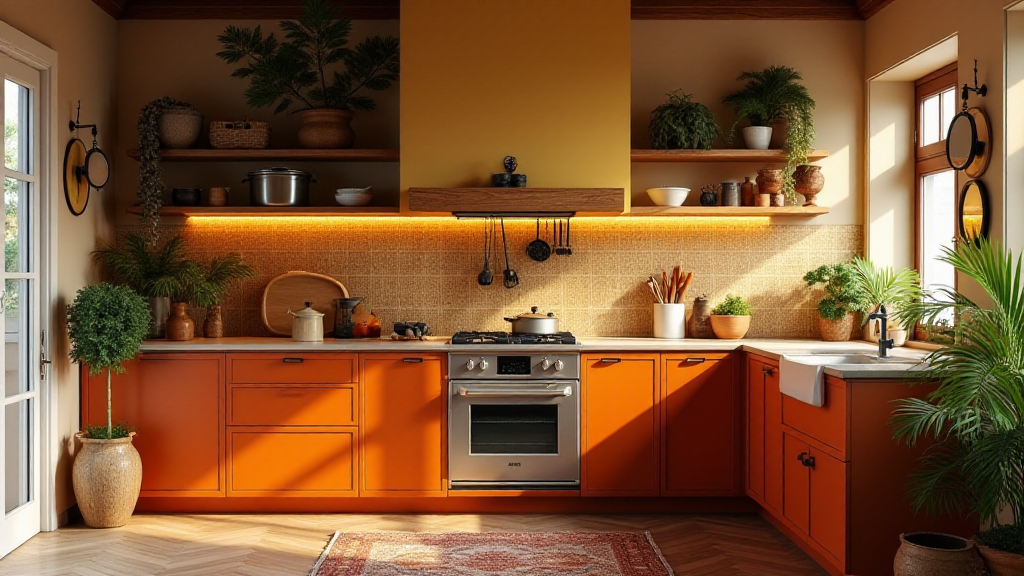
Warm Earthy Boho Kitchen


