
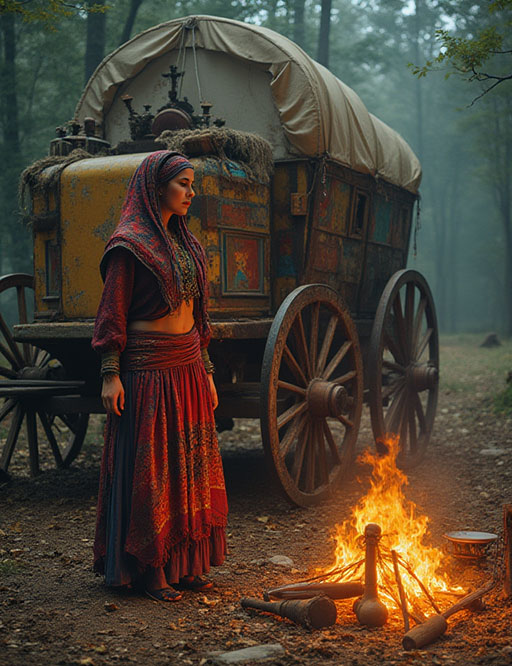
The Romani people have lived in Europe for over 1,000 years, but their journey began much earlier. Linguistic evidence points to their origins in northern India, from where they began a westward migration around the 11th century. This journey, over generations, shaped their identity as a people who adapted to diverse lands while fiercely preserving their unique way of life. They are not a single, monolithic group; they are diverse, encompassing many subgroups like the Roma, Sinti, Kalé, and Manouche, each with its own customs and dialects.
The Power of Kinship: Family and Community
At the absolute heart of Romani culture is the family, or familia. This isn’t just the nuclear family; it’s an extended network of relatives, often encompassing many generations and branches, all bound by strong ties of loyalty and mutual support. This tight-knit structure has been essential for their survival, providing a powerful safety net and a sense of belonging in a world that has often been hostile.
Community elders are deeply respected, and their wisdom guides decisions. Social events like weddings and family gatherings are vibrant affairs, filled with music, dance, and feasting, reinforcing the bonds that define their collective identity.
A Language of Journey: Romani Chib
The Romani language, or Romani Chib, is a testament to their Indian origins, belonging to the Indo-Aryan branch of languages. As they migrated across Europe, Romani Chib absorbed words and influences from the many languages they encountered, creating a rich and evolving linguistic tapestry.
While there are many dialects, the shared linguistic roots are a powerful symbol of their common heritage and a crucial element in maintaining their distinct identity. For many, speaking Romani Chib is a direct connection to their ancestors and a proud declaration of who they are.
Music: The Soul of a People
If you listen to the music of Eastern Europe, of Spain, of the Balkans, you will hear the undeniable influence of Romani artistry. Music is not just entertainment for the Romani; it is the very soul of their culture. It is an expression of their joys, their sorrows, their history, and their spirit of freedom.
From the fiery flamenco of Spain to the haunting melodies of Hungarian Romani violinists, their music is characterized by its passion, improvisation, and incredible emotional depth. It is often at the center of their celebrations, providing the rhythm for their vibrant dances and the soundtrack to their lives. Their musical contributions have enriched the cultural landscape of every region they have touched.
Resilience in the Face of Adversity
The history of the Romani people in Europe is also a deeply painful one. They have faced centuries of discrimination, persecution, slavery, and even genocide during the Holocaust—a tragedy they call the Porajmos, or “Devouring.”
Yet, through it all, the Romani culture has endured. Their traditions, their language, and their powerful sense of community have allowed them to maintain their identity against incredible odds. Today, Romani activists are fighting for recognition, human rights, and an end to systemic discrimination, working to preserve their heritage and build a future where their beautiful culture is understood and respected. Their enduring spirit is a powerful reminder of human perseverance.


