
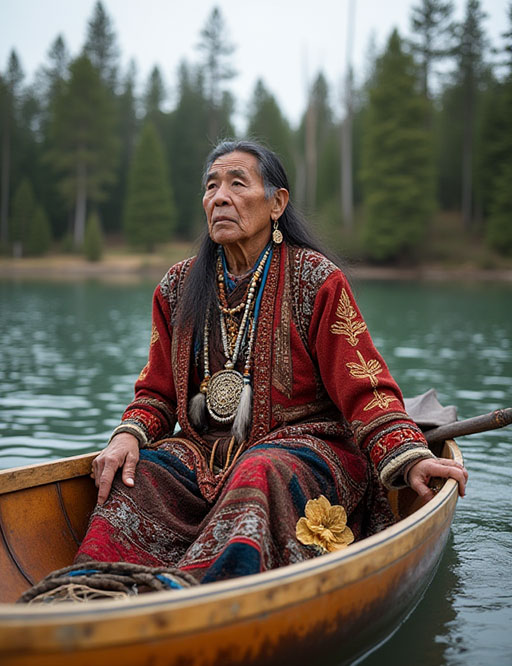
The Anishinaabeg, or Ojibwe, are one of the largest indigenous nations in North America, with communities spanning from the Great Lakes all the way to the northern plains. Their name, “Ojibwe,” is said to mean “puckered,” referring to their distinctive moccasins. But their own name for themselves, “Anishinaabe,” means “the good humans” or “the original people.” This reflects a deep spiritual understanding of their place in the world.
The Seven Grandfather Teachings: A Moral Compass
At the core of Ojibwe culture is a profound ethical framework known as the Seven Grandfather Teachings. These are not just rules; they are guiding principles for living a good life, gifted to the people by the Creator through seven grandfathers. Each teaching is associated with an animal.
-
Wisdom (Beaver): To use your inherent gifts wisely for the good of all.
-
Love (Eagle): To know unconditional love, the Creator’s love.
-
Respect (Buffalo): To honor all of Creation and yourself.
-
Bravery (Bear): To face life with courage.
-
Honesty (Sabe/Bigfoot): To be truthful in all actions.
-
Humility (Wolf): To know yourself as a part of Creation, not above it.
-
Truth (Turtle): To know and speak the truth, and to understand the sacred laws.
These teachings are passed down through stories, ceremonies, and daily life, shaping the character and community values of the Ojibwe people.
Gifts from the Land: Wild Rice and Birchbark
The Ojibwe lived in intimate connection with their environment, developing sustainable practices that honored the gifts of the Creator. Two of the most important resources were:
-
Manoomin (Wild Rice): This sacred grain, which grows abundantly in the shallow waters of the Great Lakes, was a staple food and a central part of their economy. The annual wild rice harvest is still a vital tradition, a careful process of gathering and processing that reflects their deep respect for the plant.
-
Wiigwaas (Birchbark): The versatile bark of the birch tree was like nature’s plastic. It was used to create everything from canoes that glided silently across the lakes to lightweight containers (makakoon) for storing food, and even scrolls for recording sacred teachings. The birchbark canoe, in particular, is a testament to Ojibwe ingenuity and their mastery of their watery world.
The Sacred Fire: Midewiwin and the Spirit World
The spiritual heart of Ojibwe culture is often found in the Midewiwin, or Grand Medicine Society. This is a spiritual society where healers and spiritual leaders undergo extensive training to learn ancient ceremonies, songs, and knowledge related to healing and understanding the spirit world. The teachings are often recorded on birchbark scrolls, preserving the sacred history and practices.
The drum is also a vital part of Ojibwe spiritual life. It is considered the heartbeat of the Anishinaabe people, its rhythm connecting them to the Creator and to their ancestors during ceremonies and powwows.
Enduring Through Challenges
Like many indigenous peoples, the Ojibwe faced immense hardship due to colonization, forced relocations, and the devastating impact of residential schools. Their language, Anishinaabemowin, was suppressed, and many traditions were forced underground.
Yet, the Ojibwe culture has shown incredible resilience. Today, there is a powerful resurgence. Communities are revitalizing their language programs, rebuilding cultural centers, and reconnecting with traditional practices. The annual Gathering of Nations Powwow and smaller local powwows are vibrant celebrations of their living culture, a testament to a people who have walked through immense challenges and emerged with their spirit strong and their traditions alive. The Ojibwe continue to teach the world about respecting the earth and living with a good heart.


