
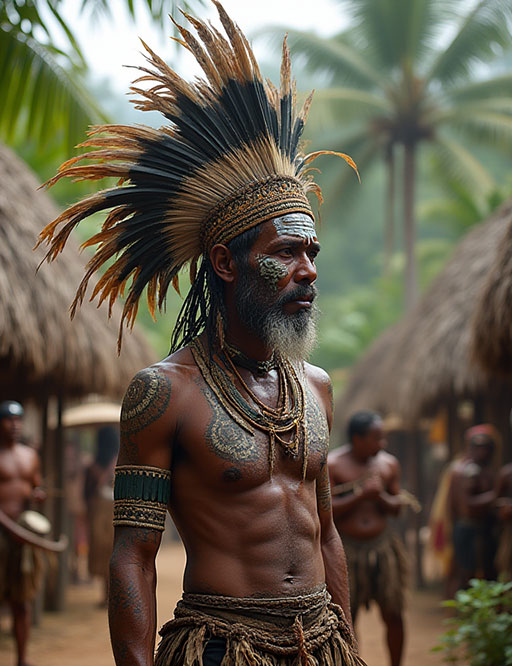
Papua New Guinea is a country that defies easy description. It is home to over 800 distinct indigenous languages—more than any other country in the world. This incredible diversity is a direct result of its geography. The rugged, mountainous terrain has kept communities isolated from one another for millennia, allowing them to develop their own unique customs, beliefs, and artistic traditions.
The Tie That Binds: The Wantok System
In a land with so many different groups, what holds society together? The answer is the wantok system. This term, from the Tok Pisin language, literally means “one talk,” and it refers to people who speak your language—your tribe, your clan.
Your wantok are your family. They are your social safety net, your bank, your allies, and your responsibility. This bond of mutual obligation is the most powerful force in society, far more important than a shared national identity. It is a system of profound loyalty that has allowed these small communities to thrive for generations.
The Ultimate Celebration: The Sing-Sing
The most breathtaking expression of this diversity is the sing-sing. A sing-sing is a grand gathering where different tribes come together to share their music, dance, and traditions. It is an explosion of color, sound, and energy.
Warriors and dancers adorn themselves with incredible body paint, intricate masks, and magnificent headdresses crafted from the iridescent feathers of the bird-of-paradise, shells, and flowers. Each tribe has its own unique style, its own rhythm, its own story to tell. A sing-sing is not a performance for tourists; it is a vital celebration of identity, a way to maintain traditions, settle disputes, and display a tribe’s strength and pride.
A Glimpse of Diversity: Wigmen and Mudmen
To understand just how different these cultures can be, you only need to look at two of PNG’s most famous groups:
-
The Huli Wigmen of the Highlands are renowned for their elaborate wigs, which are crafted over months from their own hair. They paint their faces yellow and perform dances that mimic the bird-of-paradise.
-
The Asaro Mudmen cover their bodies in ghostly white clay and wear heavy, grotesque mud masks. They move slowly and silently, reenacting an ancient legend where their ancestors terrified an enemy tribe by emerging from a foggy riverbank, appearing as spirits of the dead.
These are just two of the hundreds of unique cultures that make up the living fabric of the nation.
The Papua New Guinea culture is a journey into a world where the spirit world is ever-present, where ancestors are still part of the family, and where your identity is painted on your skin and sung in your own ancient tongue. It is a powerful reminder of the incredible diversity of the human experience.


