
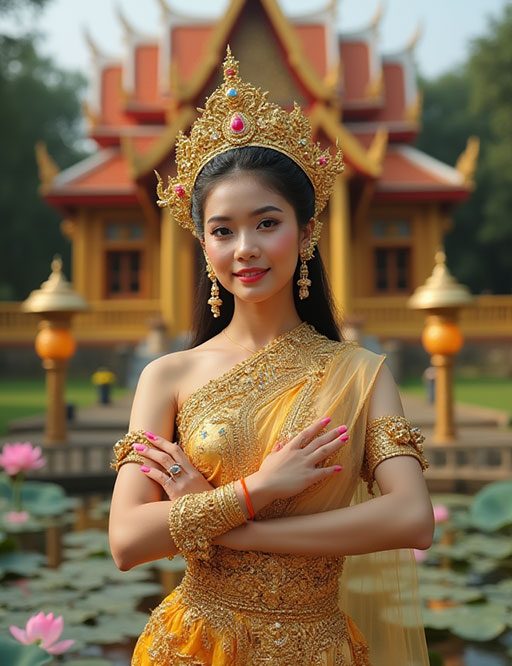
The gentle rhythm of life in Thailand is deeply influenced by Theravada Buddhism. You see it everywhere—from the magnificent temples (wats) that adorn every city to the common sight of monks in their saffron robes walking silently in the early morning. 🙏 But this faith is beautifully blended with older animist beliefs.
Nearly every home and building, no matter how modern, will have a tiny, ornate spirit house (san phra phum) on its property. These are homes for the protective spirits of the land. Daily offerings of food, drink, and incense are made to keep the spirits happy, showing a deep and continuing respect for the spiritual world that exists alongside the physical one.
The Graceful Greeting: The Wai
You can learn a lot about Thai culture from a single gesture: the wai. This prayer-like gesture, with the hands pressed together and the head slightly bowed, is the traditional greeting. But it’s so much more than a “hello.”
The wai is a gesture of respect. The height of the hands and the depth of the bow change depending on the age and social status of the person you are greeting. A younger person always offers the wai first to an elder. It’s a beautiful, non-verbal way of acknowledging social hierarchy and showing politeness, which is incredibly important in Thailand.
A Feast for the Senses
Thai food is a global phenomenon for a reason. It’s a central part of life, a social event meant to be shared. The genius of Thai cuisine lies in its perfect balance of five fundamental flavors: spicy, sour, sweet, salty, and bitter. Every dish is a complex and delicious dance of these elements.
From the bustling street food stalls of Bangkok, which are a cultural institution in themselves, to family meals at home, food is a celebration of flavor, community, and the rich agricultural bounty of the land.
The Thai culture is a delicate dance of joy, respect, and serenity. It’s a reminder that a smile can be more than just an expression—it can be a philosophy.


