
Discover the Vibrant Scarlet Tanager: A Jewel of the Forest
Discover the Vibrant Scarlet Tanager: A Jewel of the Forest
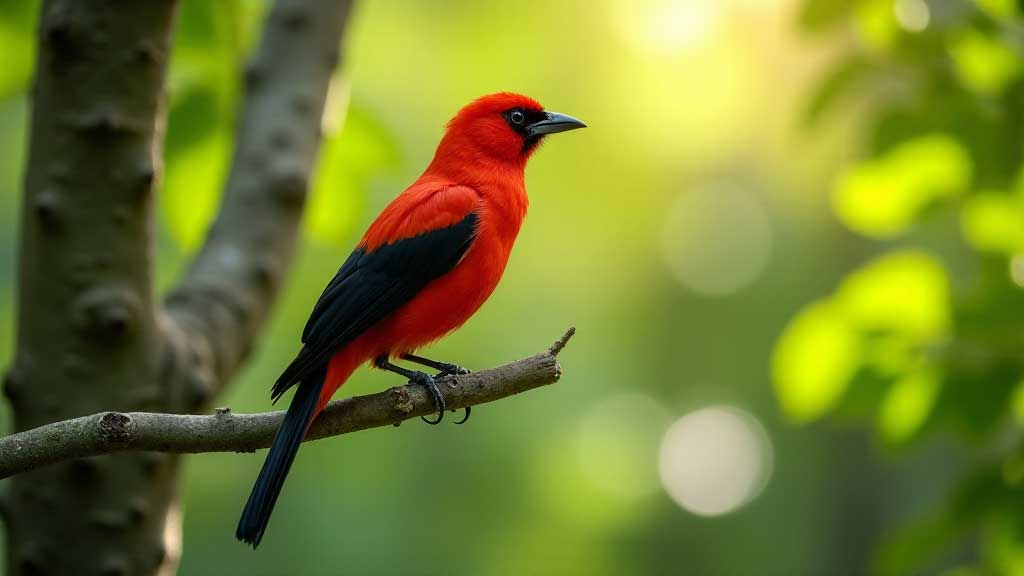
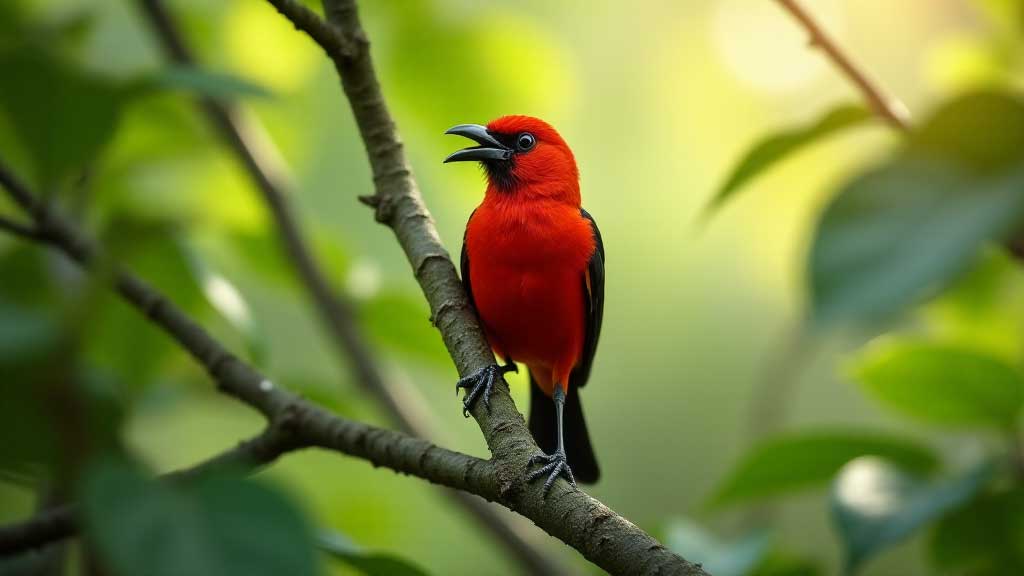
The Scarlet Tanager, with its brilliant red plumage and jet-black wings, is one of the most striking songbirds of North America. Found primarily in deciduous forests, this bird adds a splash of vivid color to the forest canopy, making it a favorite among birdwatchers and nature enthusiasts. Though they may be elusive, their appearance during the breeding season brings excitement to those lucky enough to spot them.
Seasonal Beauty
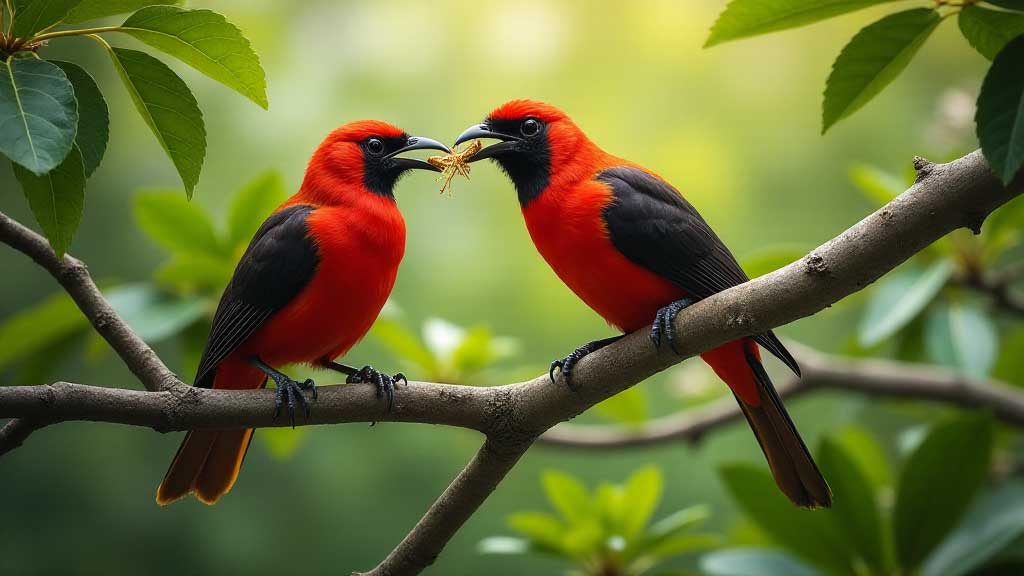
The male Scarlet Tanager is especially recognizable during the breeding season. From late spring to early summer, males are cloaked in radiant scarlet feathers, contrasted with black wings and tails. Females, though less flashy, are just as fascinating with their olive-yellow plumage, which helps them blend into their surroundings. After the breeding season, the males molt into a more subdued yellowish-green, similar to the females, making them harder to spot.
These birds migrate long distances between Central and South America, where they spend the winter months, and the United States, where they nest and breed. Their journey is an incredible feat, as they travel across the Gulf of Mexico, making them true adventurers of the bird world.




Habitat and Diet
Scarlet Tanagers prefer the upper canopy of deciduous and mixed forests, where they are often heard before they are seen. Their call is described as a “robin with a sore throat,” a somewhat raspy yet melodic song that carries through the treetops.
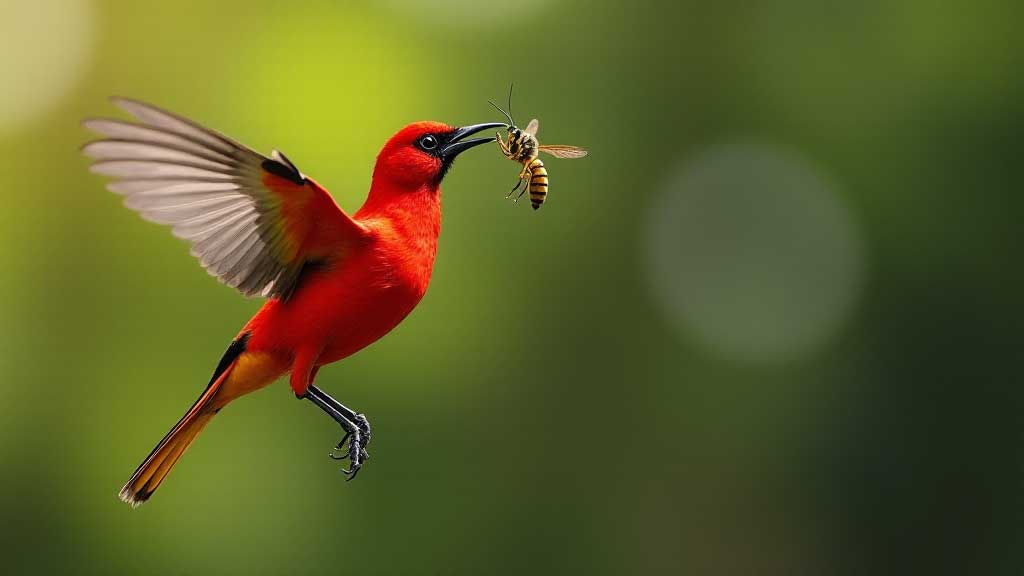
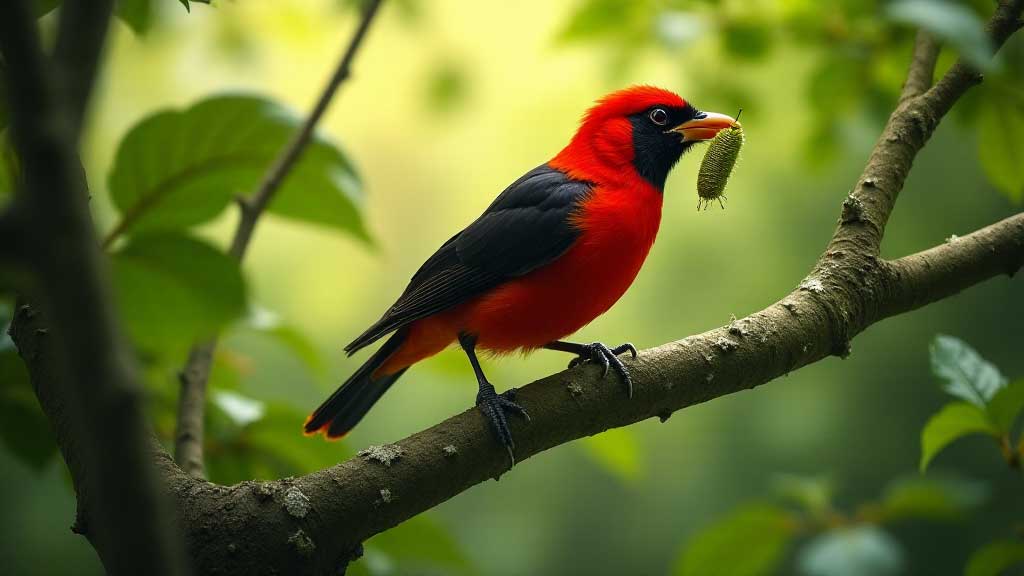
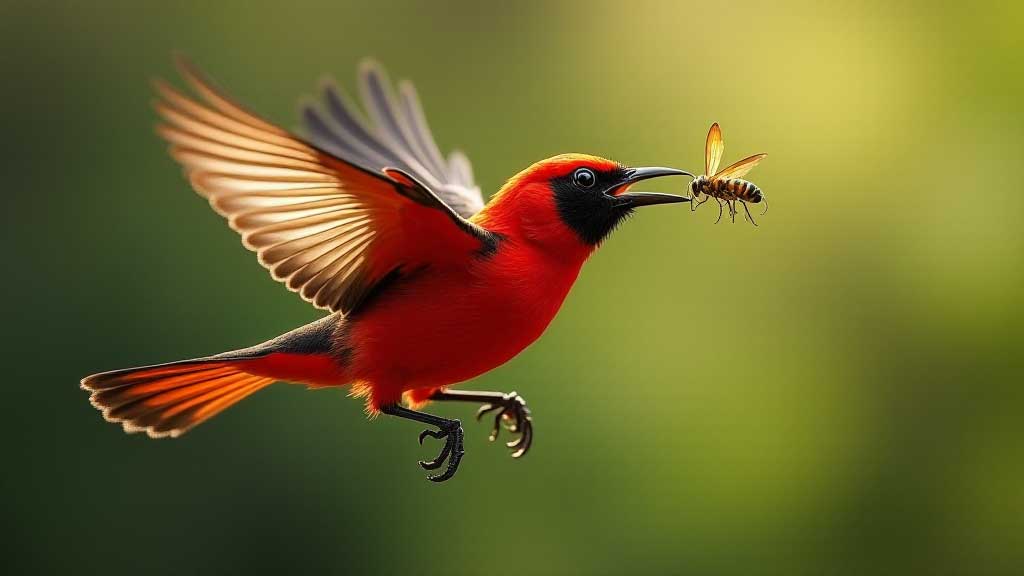
Their diet consists primarily of insects such as beetles, caterpillars, and wasps, which they capture with precision in mid-air or by foraging through the foliage. They also feed on fruits, particularly during migration, when they need to build up fat reserves for their long journey.
How to Identify Scarlet Tanger Song
Scarlet Tanger Song
Conservation and the Importance of Forests
While the Scarlet Tanager is not currently endangered, habitat loss and forest fragmentation pose ongoing threats to its population. Conservation efforts focused on preserving large tracts of forests are essential to ensuring that these beautiful birds continue to thrive.
By protecting their breeding and wintering habitats, we can help ensure that the Scarlet Tanager’s seasonal visits to North America continue, filling our forests with the brilliant flash of red that is their signature.


